
CAER 25th Annual Environmental Justice Conference: Climate Refugees
 on
on  on
on
 on
on CAER is hiring staff for the 2018–2019 school year. Check out the position descriptions below. Each position requires a 5-hour time commitment each week, with 2 of those hours spent staffing the CAER office in the EMU Multicultural Center. You must be a current UO student to apply. Students of color and native and indigenous students are especially encouraged to apply for these leadership positions. Submit a cover letter and resume to caer@uoregon.edu. Please put “Staff Position” in the subject line. Deadline to Apply: Saturday, May 26
2018–2019 CAER Staff Positions
Director
The director position requires strong organizational and leadership skills. The CAER director is responsible for planning and facilitating general and staff meetings and for acting as a spokesperson and representative for CAER. The director prepares informative presentations for each meeting and coordinate activities and discussions in both the general and staff meetings. Directors also take a leadership role in planning the annual Environmental Justice conference, overseeing the tasks of other members. Moreover, managerial duties such as coordinating office hours, administering stipends, and checking the email account are also required. We are seeking someone who is organized, motivated, and self directed to fill this position. Responsibilities include the following:
Finance Coordinator
The Finance Coordinator’s main responsibility is the management of the CAER budget that is allocated from the ASUO. We are seeking someone who is organized, motivated, and self directed to fill this position. The new Finance Coordinator will be trained and expected to execute the following tasks:
Marketing Coordinator
The Marketing Coordinator is responsible for marketing CAER events to the campus community (students, staff, and faculty), other colleges and campuses in Oregon, and the larger Eugene community. We are seeking someone who is organized, motivated, and self directed to fill this position. Responsibilities include the following:
Internal Outreach Coordinator
The Internal Outreach Coordinator is responsible for recruiting student organizations to join CAER as member organizations meanwhile maintaining campus relationships with different student organizations and other campus stakeholders. They also recruit campus community (students, staff, and faculty) to attend CAER events, meetings, and the annual conference. We are seeking someone who is organized, motivated, and self directed to fill this position. Responsibilities include the following:
Community Liaison
The Community Liaison is responsible for connecting and maintaining relations with the larger Eugene community, particularly EJ organizations. This involves taking initiative to coordinate events with other groups in the community. The community liaison must also maintain active CAER social media accounts so that the community feels connected with our organization. We are seeking someone who is organized, motivated, and self directed to fill this position. Responsibilities include the following:
 on
on CAER hosted our 24th Annual Environmental Justice Conference on April 14, 2018. Check out a few photos of the event:
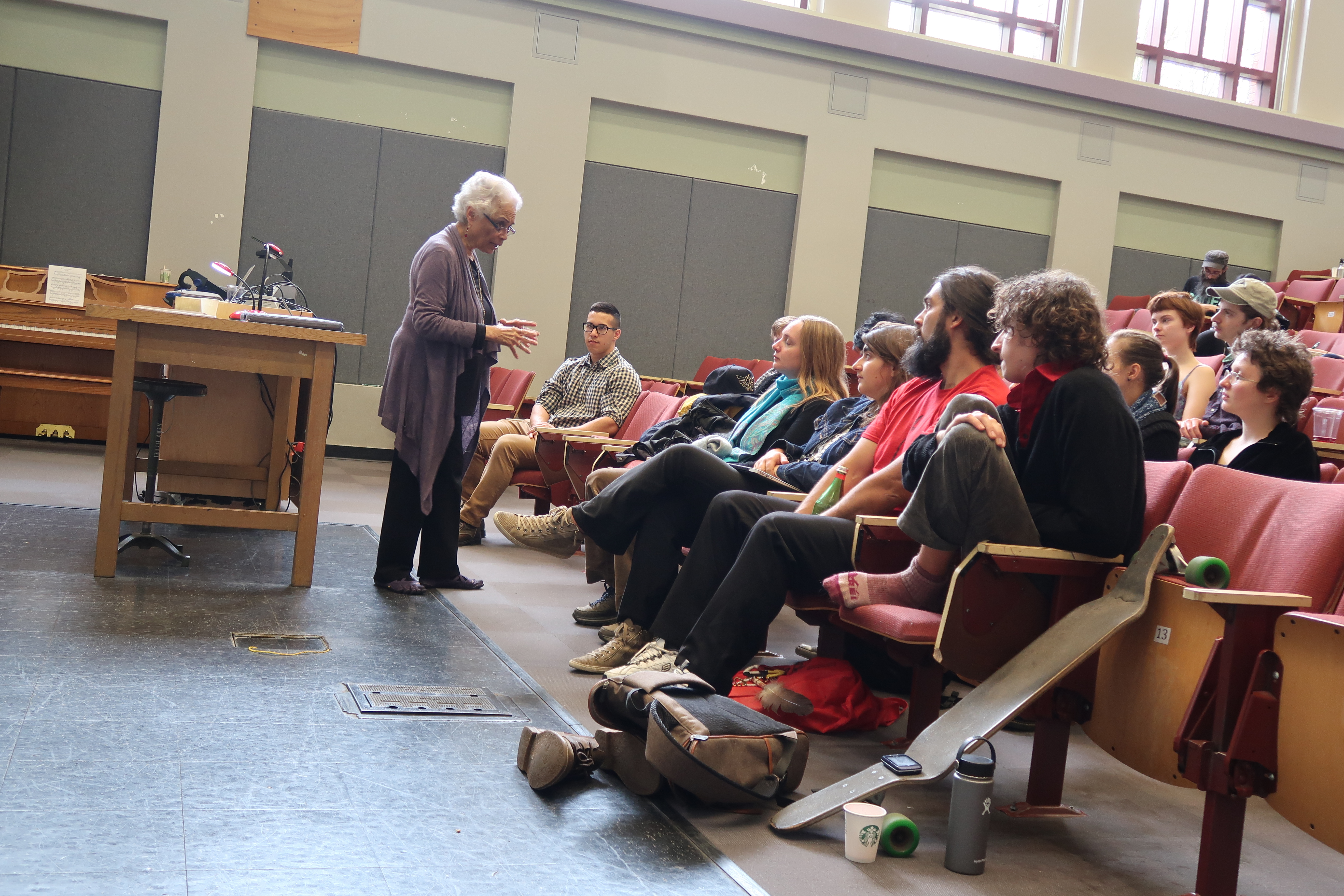
Dr. Sharon Egretta Sutton during the Q&A after her keynote address, “Disrupting Urban Inequality: A Vision of Inclusive Redevelopment”:
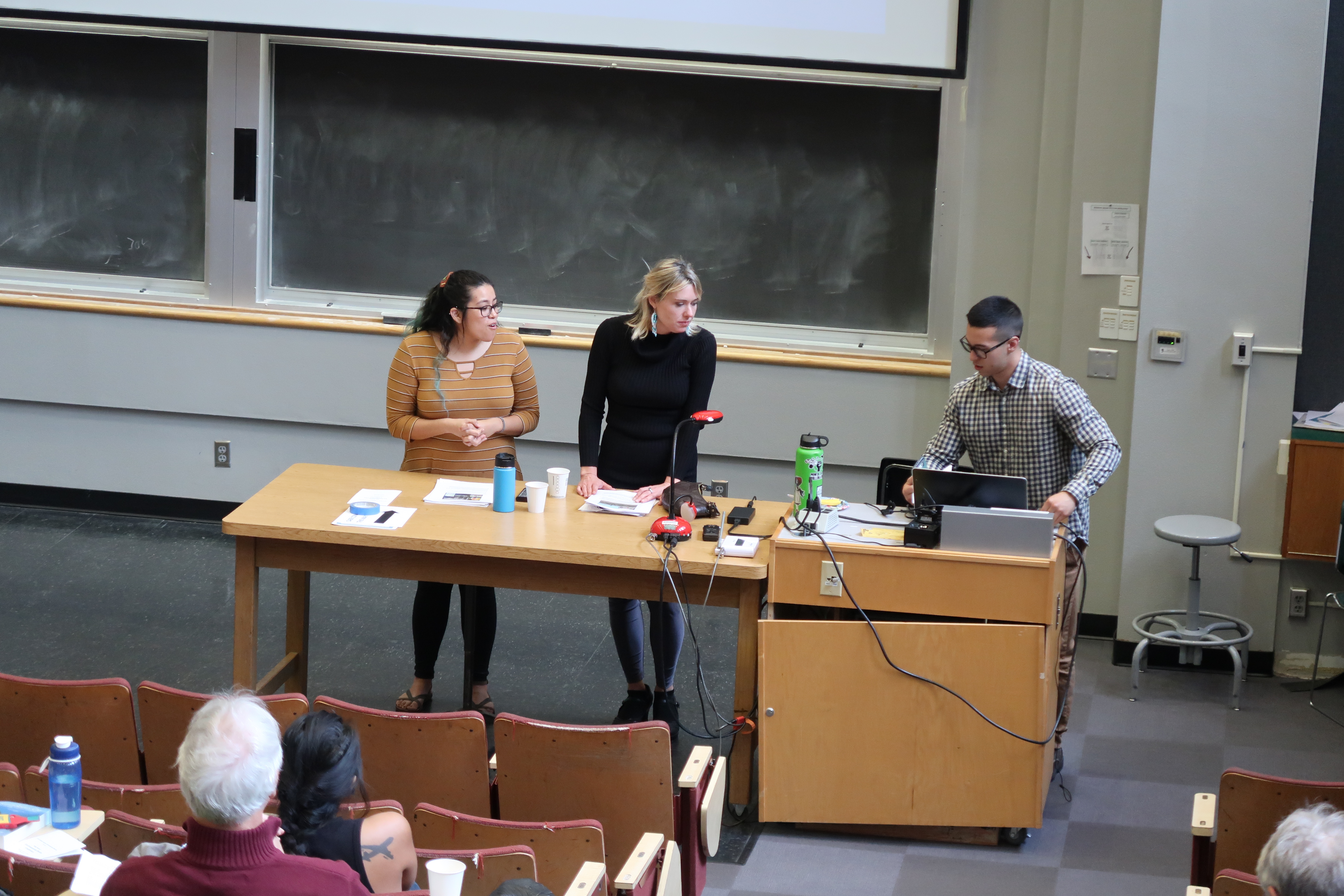
Beyond Toxics presenting “Environmental Justice 101”:
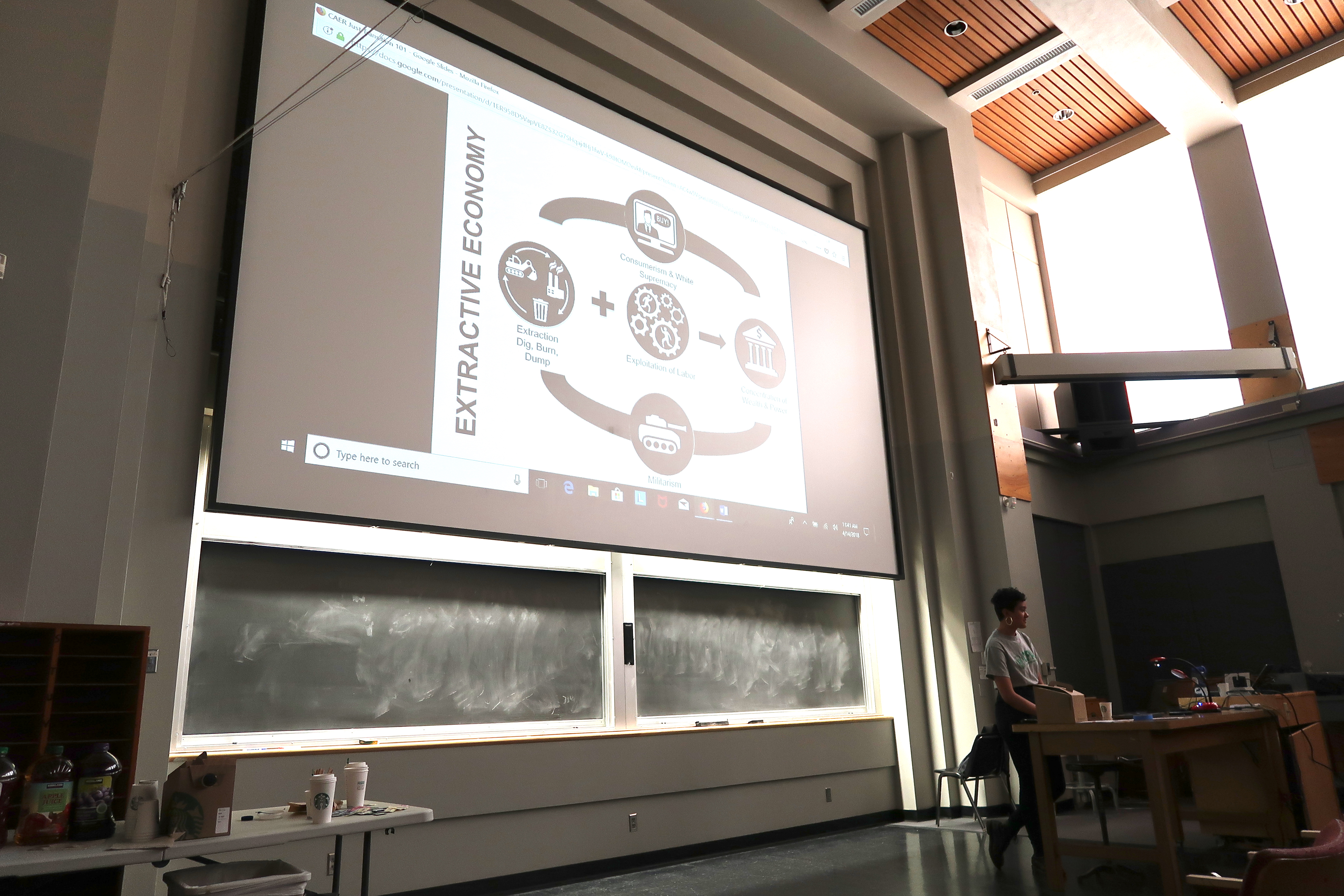
OPAL Environmental Justice presenting on Just Transition:
on The UO Student Sustainability Coalition has a new name and website.
Please visit coalition.uoregon.edu
on The Coalition Against Environmental Racism, Beyond Toxics, and Centro Latino Americano are pleased to announce the Environmental Justice and Bus Tour event. This event is two parts, described below.
The first event will be an Environmental Justice Panel held on April 12th, 2012 at 7 pm in the Jacqua Center Auditorium. It will consist of three panelists: Caleen Sisk (the tribal leader of the Winnemen Wintu), Luis Olmedo (a community EJ activist from San Diego), and Ben Duncan (Chair of the Governor’s Oregon Environmental Justice Task Force). The panel will give three very different and intriguing perspectives on pollution in vulnerable communities. This event is free and open to the public.
The second event is the Environmental Justice “Toxic” Bus Tour itself – students will get to experience Environmental Justice activism first hand! Participants will be touring the toxic sites in West Eugene. This event will include students, community members, and city officials. Participants will have the opportunity to see the sites, converse with community members from the area and city officials, and will have the opportunity to attend a community forum where impacted West Eugene residents with talk with city officials how about steps to mitigate the pollution in their community. This will give students an opportunity to see these issues in their community and witness a community bringing about profound political change. Lunch is provided by a local caterer. This event is by registration only. Community members can register by emailing aguzman@beyondtoxics.org and students can register through thisform. Space is limited (50 spots for each group) so register quickly! The cut-off date is April 6th, 2012 at 5 pm.
This Event is Generously Supported by the Student Sustainability Fund, Yamada Language Center, and the Center for the Study of Women and Society.
on The Coalition Against Environmental Racism (CAER) is proud to announce its 17th Annual Grassroots Environmental Justice Conference on Saturday April 7th, 2012. No registration is required. Please join us for a great weekend of free food and free knowledge at the University of Oregon (EMU Fir Room (Keynotes and Artistic Panel) and River Rooms (all other events))!!
Here is the schedule:
1030: Light Breakfast River Rooms
11:00 EJ workshop led by CAER River Rooms
12:00 Lunch Keynote: Breeze Harper Fir Room
1:30 Free Time/Games/Networking River Room
2:00 Local Eugene Panel River Room
3:00 NW Dirty Energy Panel River Room
4:00 Food Justice Panel River Room
5:00 Free Time/Games/Networking River Room
5:30 Dinner Keynote: Michelle Williams Fir Room
7:00 EJ Art Workshop: Favianna Rodrguez Fir Room
Our lunch keynote, Breeze Harper, is an accomplished scholar on issues of black feminisms, critical race theory, and food politics. She has also edited the volume Sistah Vegan: Black Female Vegans Speak about Food, Identity, Health, and Society. This volume, as well her presentation, explores food politics, identity, sexuality, heath, womanism, feminism, decolonization, anti-racism, eco-sustainability, and animal rights through the lens of the black female vegan experience in the USA.
For our dinner keynote, we are hosting Michelle Roberts. She is affiliated with the Advocates for Environmental Human Rights and has provided technical assistance and advocacy support to communities regarding the impacts of toxins on human health and the environment. In addition, she is a spoken word artist who created Arts Slam @SsAMS, a community-based arts program. She has co-authored reports on environmental justice issues and her advocacy work is featured in television, print news, and magazines.
Finally, CAER will be hosting an Environmental Justice artistic workshop as part of the conference with renowned Oakland-based Chicana artist Favianna Rodriquez. Her composites reflect literal and imaginative migration, global community, and interdependence. Her subjects vary, including immigrant day laborers in the US, mothers of disappeared women in Juárez, Mexico, and herself. Through her work we witness the changing US metropolis and new dispora in the arts.
Please do not hesitate to contact caer@uoregon.edu with any questions.
This event is generously supported by: Center for Multicultural Academic Excellence
on Hi!
We are very excited for CAER this year! Please join us for our first meeting TONIGHT (Tuesday September 27) at 7 pm in the MCC
Hope to see you all there!
on 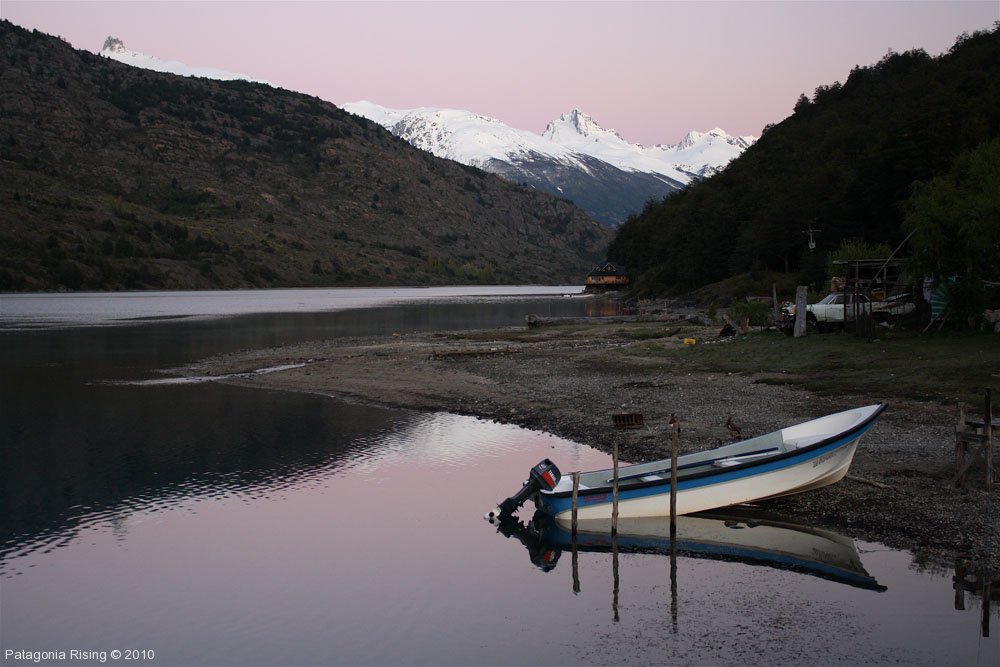
Join us for the Oregon premier of a new Environmental Justice film.
Deep in the heart of Patagonia, Chile flow two of the world’s purest rivers, the Baker and Pascua. Fed by vast glacial systems, these free-flowing watersheds drive biodiversity in temperate rainforests, estuaries and marine ecosystems. They are also the life source for Patagonia’s most tenacious residents. Gauchos, the iconic South American cowboys, endure rele…ntless winds and long winters on remote ranches in these river valleys.
Isolated and largely undeveloped Patagonia and its people are caught in a heated conflict surrounding a proposal to build five large hydroelectric dams on the Baker and Pascua Rivers. Promoted as “clean” energy, the project’s cultural and environmental impacts would forever alter the region. Alternatives exist. Clean energy experts are proving the viability of solar, wind and geothermal resources developed much closer to demand and infrastructure.
Over the past century more than 45,000 large dams have redefined the course and health of the planet’s rivers with disastrous impacts that continue to unfold. Tracing the hydrologic cycle of the Baker from ice to ocean, Patagonia Rising brings voice to the frontier people caught in the crossfire of Chile’s energy demands. Juxtaposing the pro-dam business sector with renewable energy experts, the documentary will bring awareness and solutions to this global conflict over water and power.
Trailer: http://patagoniarising.com/trailer
on 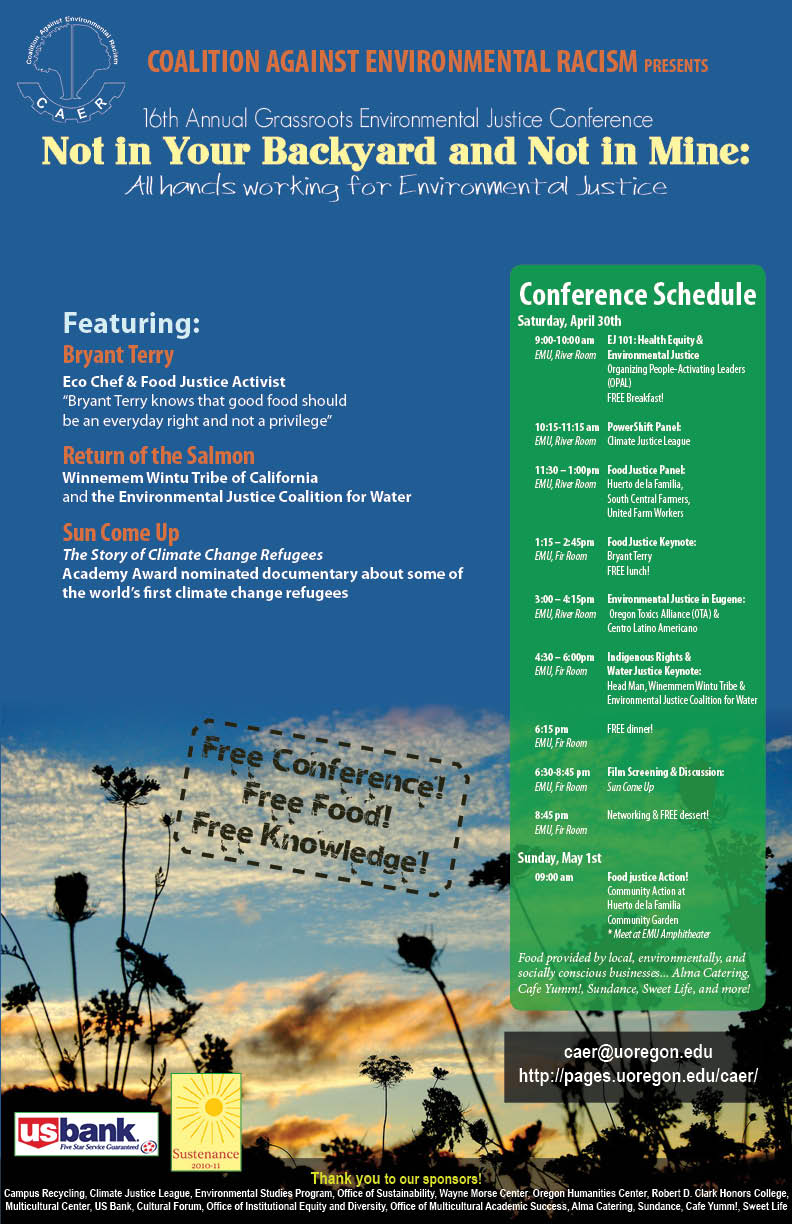
The Coalition Against Environmental Racism (CAER) is hosting its 16th Annual Grassroots Environmental Justice Conference on Saturday, April 30th and Sunday, May 1st. No registration is required. Please join us for a great weekend of free food and free knowledge at the University of Oregon (EMU Fir Room and River Rooms)!!
See attached poster for detailed conference schedule. Please do not hesitate to contact caer@uoregon.edu with any questions.
Saturday will be filled with workshops, panels, and speakers on environmental justice topics such as, climate justice, food justice, water justice, indigenous rights, and health equity.
on This is only for the above week. Starting April 12, 2011, meetings will resume their standard time at 7 pm in the MCC (located in the EMU below Panda Express)